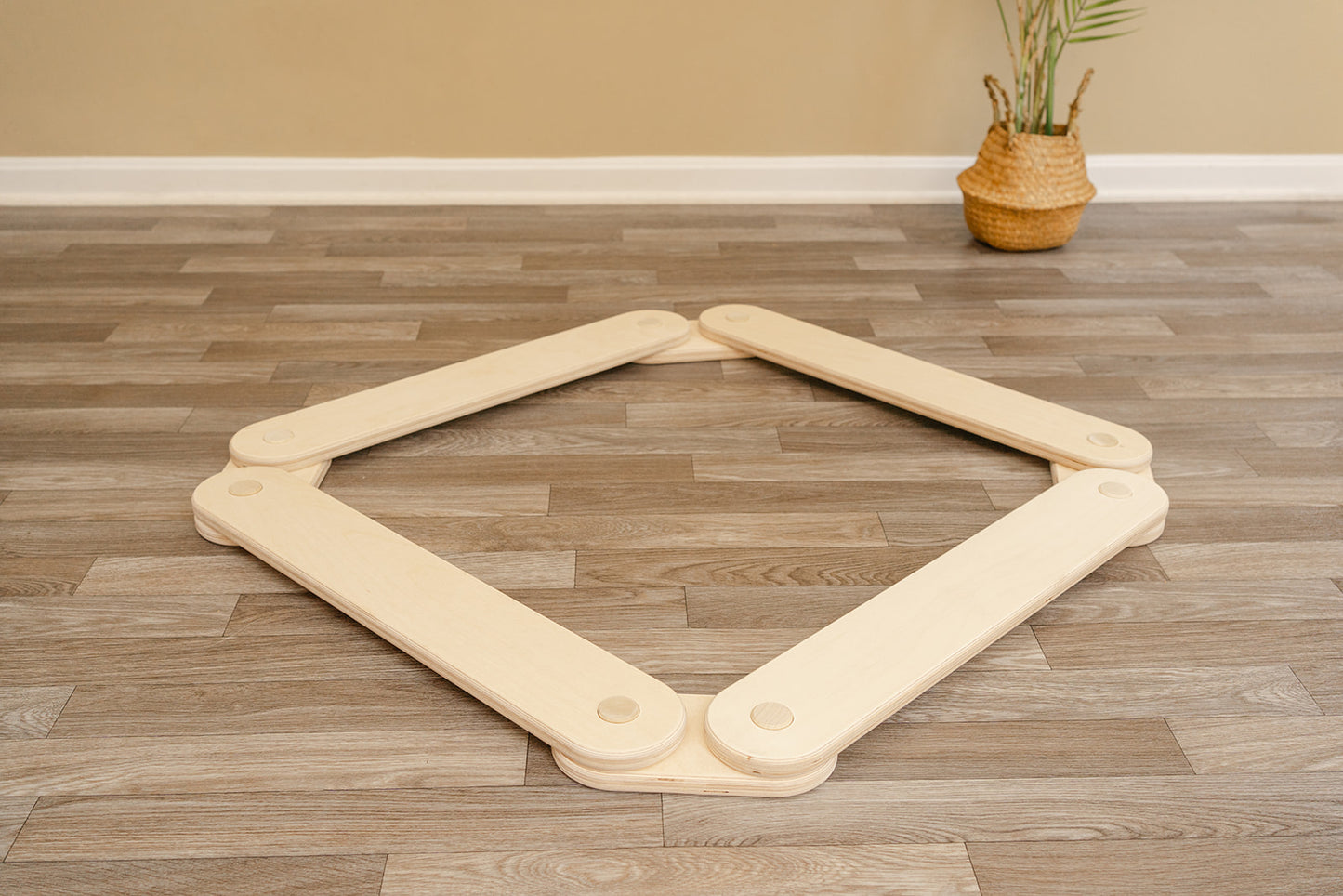
The Balance Beam
The Balance Beam
What is The Balance Beam?
The Balance Beam is ideal for open-ended play and perfecting little one's gross motor skills including balance, coordination, and concentration. The beams come in and out of joints easily for kiddos to connect the beams themselves. It's the building blocks of balance beams!
Features
✓ open-ended play
✓ STEM learning
✓ great for obstacle courses
Made in the USA
Made in the USA at an Ohio woodshop
Current fulfillment time is 2-3 weeks
Couldn't load pickup availability
Description
Description
Includes
Includes
Materials
Materials
100% birch plywood
Shipping & Returns
Shipping & Returns
Free shipping on orders over $150.
If you’re not happy with your item we offer full refunds on unused items (minus a $30 return-shipping fee) within 30 days of purchase.
To be eligible for a return, your item must be in the same condition that you received it, unused, and in its original packaging.
To start a return, you can contact us at contact@blueberryandthird.com.
Dimensions
Dimensions
Each beam is 23 1/4 inches long and 4 inches wide. Total length when all 4 beams are connected about 8 feet Total length when all 6 beams are connected is about 10 feet long.
Care and Use Instructions
Assembly
Assembly
Warnings
Warnings

FAQ
-
What is the best age for The Balance Beam?
The best age range for The Balance Beam is 1 years old through 8+ years, making it a versatile gross motor development tool that grows with your child through multiple stages. Toddlers ages 1-2 begin learning basic balance skills by walking along the beam with adult support, building confidence in body awareness and coordination. Preschoolers ages 3-5 master independent beam walking, practice heel-to-toe steps, and experiment with backwards walking or sideways movements. Early elementary children ages 5-8+ use it for advanced challenges like balancing on one foot, hopping along the beam, carrying objects while walking, or creating obstacle courses. Many pediatric occupational therapists and physical therapists recommend balance beams for children with sensory processing needs, motor planning challenges, or those working on core strength and stability regardless of age.
-
Is The Balance Beam easy to store in small spaces?
Yes! The Balance Beam's slim profile makes it easy to store under couches, beds, or neatly on the shelf when not in use—perfect for apartments, small homes, or multi-purpose playrooms. The thin, flat design (typically 2-4 inches tall) slides effortlessly under most standard sofas, beneath beds, or into closets without taking up valuable floor space. Many families keep balance beams in living rooms, sliding them under furniture between play sessions so they're easily accessible but not constantly underfoot. The lightweight wood construction allows even young children to help with setup and storage. Unlike bulky play equipment that dominates a room, balance beams provide powerful gross motor development in a compact, storage-friendly format.
-
Should children wear socks or go barefoot on The Balance Beam?
Children should go barefoot on The Balance Beam for optimal grip, safety, and sensory feedback during balance activities. Bare feet provide natural traction on the wooden surface, preventing slipping that often occurs with socks—especially during dynamic movements like turning around or walking backwards. If your child absolutely prefers socks, choose grip socks with rubber dots on the bottom, though barefoot remains the gold standard recommended by pediatric occupational therapists and physical therapists.
-
At what age can children assemble The Balance Beam themselves?
Children around ages 5-7 can typically assemble The Balance Beam independently with simple beam-connecting systems, though exact age depends on the child's fine motor skills and experience with assembly tasks. Younger children (ages 3-5) can help with assembly under adult supervision, learning to line up beams, connect pieces, and follow sequential steps—valuable problem-solving and motor planning practice. Older elementary children (ages 7+) often assemble beams completely independently, creating custom configurations and obstacle courses based on their skill level and imagination. The ability to self-assemble empowers children to modify their play environment, adjust challenge levels, and take ownership of their gross motor practice. This independence aligns with Montessori principles of child-directed activity and builds confidence in their capability to manipulate their environment.
-
Do The Balance Beam pieces fully connect together securely?
Yes! The Balance Beam pieces connect together securely using interlocking pill base connectors, that create stable, continuous walking surfaces. The secure connections are crucial for safety and confidence-building, especially for younger children or those with balance challenges who need predictable, stable surfaces. The ability to connect beams in various ways provides years of progressively challenging gross motor practice as children's skills develop.
-
What are The Balance Beams best used for?
The Balance Beams are best used for developing gross motor skills, core strength, body awareness, coordination, and vestibular processing through active, engaging play. Specific benefits include: improving balance and stability for everyday activities like walking, running, and climbing; building core muscle strength essential for posture and physical confidence. Creating indoor active play opportunities during bad weather or in homes without outdoor space; supporting physical therapy exercises in a fun, motivating format; and fostering confidence in physical abilities through progressive skill-building. Pediatric therapists particularly value balance beams for addressing developmental delays, improving coordination, and encouraging movement in children who avoid physical activities.
-
Why have The Balance Beams been endorsed by pediatric OT and PT specialists?
The Balance Beams have been endorsed by pediatric occupational therapists (OTs) and physical therapists (PTs) because they effectively address multiple developmental areas in an engaging, child-friendly format that encourages repeated practice. OTs value balance beams for providing crucial vestibular input (balance and spatial orientation), proprioceptive feedback (body awareness), and motor planning practice essential for daily activities like dressing, handwriting, and navigating environments safely. The progressive challenge levels (low to ground for safety, increasable difficulty through configurations) allow therapists to meet children at their current skill level and gradually advance abilities. Balance beams transform therapeutic exercises into play, increasing engagement and practice frequency compared to clinical settings, leading to faster skill development and better outcomes.
-
Can multiple children use The Balance Beams simultaneously?
Yes! Multiple children can use connected Balance Beams simultaneously for cooperative play, turn-taking practice, and social skill development through shared gross motor activities. When beams are configured in longer paths, 2-3 children can walk the course together, practicing patience as they navigate around each other, coordinate movements, and encourage peers attempting challenging sections. Siblings often create games like "follow the leader," or obstacle courses with multiple entry points. In classroom, therapy, or playgroup settings, balance beams support parallel play for younger children and cooperative challenges for older kids. However, adult supervision is important when multiple children use beams simultaneously to ensure safe spacing and prevent collisions during active play.
-
What surfaces are safe for using The Balance Beams?
The Balance Beams are safest on flat, level surfaces including carpets, rugs, foam play mats, grass, or rubber gym flooring that provide cushioning in case of falls while maintaining beam stability. Carpeted playrooms and bedrooms are ideal indoor locations—the carpet offers padding without making beams wobble or slide. Foam interlocking play mats create excellent cushioned surfaces for younger children or those learning new balance skills. Avoid placing balance beams on slippery surfaces like hardwood or tile floors where beams might slide unexpectedly, or on uneven surfaces that create unstable wobbling. Always ensure adequate clearance space (2-3 feet on each side) free from furniture, sharp corners, or hard objects that could cause injury during falls—normal and expected parts of learning balance skills.