When Do Babies Start Sitting Up? A Mom's Honest Guide to This Milestone (and the Pediatric Research Behind It)
When Do Babies Start Sitting Up? A Mom's Honest Guide to This Milestone (and the Pediatric Research Behind It)
"When do babies start sitting up?" was one of my most-Googled questions as a first-time mom — usually typed one-handed at some ungodly hour, baby finally down, me wide awake and spiraling a little. By the time I was raising my second daughter, I had learned to relax into the range instead of chasing an exact date. So if you're mid-scroll right now wondering whether your baby is "on track," here's the honest, research-backed answer, mom to mom.
1 When Do Babies Start Sitting Up, According to Pediatric Research?
Sitting up isn't a single moment — it's a gradual progression, and pediatric sources describe it in stages rather than one milestone day. According to the American Academy of Pediatrics (AAP), babies typically start sitting supported or in a "tripod" position (using their hands on the floor for balance) somewhere between 4 and 6 months old. Independent sitting — no hands, no support — usually follows around 6 to 9 months.

It's worth knowing that the CDC updated its official milestone checklists in 2022, shifting the benchmark from when 50% of babies typically reach a skill to when about 75% of babies do. Under that update, independent, hands-free sitting is now listed as a 9-month checkpoint — which simply means the "official" range broadened, not that anything changed about your baby.
2 Supported Sitting vs. Tripod Sitting vs. Independent Sitting
These terms get thrown around a lot, so here's the plain-language version:
- Supported sitting — your baby sits upright in your lap or a seat, relying entirely on you or the seat for balance. This often starts around 3 to 4 months.
- Tripod sitting — your baby sits on the floor and uses one or both hands planted in front of them for balance, forming a little "tripod" shape. This typically shows up around 4 to 6 months.
- Independent sitting — your baby sits upright with no hands and no support, steady enough to reach for and play with toys. This is the skill most pediatric sources place between 6 and 9 months.
3 How to Help Your Baby Build Sitting Strength
Sitting requires real core, neck, and trunk strength — and like most gross motor skills, it builds gradually through practice, not all at once. A few things pediatric sources point to as genuinely helpful:
- Plenty of tummy time from early on, which builds the same head, neck, and upper-body control that sitting depends on.
- Hip-supported sitting practice — holding your baby steady at the hips rather than under the arms, which encourages their trunk muscles to do more of the actual work.
- More floor time, less "container" time — minimizing long stretches in swings, bouncers, and car seats so your baby has more freedom to wobble, shift their weight, and build balance naturally.
A baby does not need to look impressive to be learning exactly what they need to learn.
4 Give Them a Reason to Sit Up: Gross Motor Play and Low Surfaces
Once your baby is working on sitting, the environment around them genuinely matters. Babies at this stage are motivated by having something worth reaching, watching, and engaging with right at their own level — which is exactly where a lot of the "practical life" thinking behind Montessori furniture comes in.
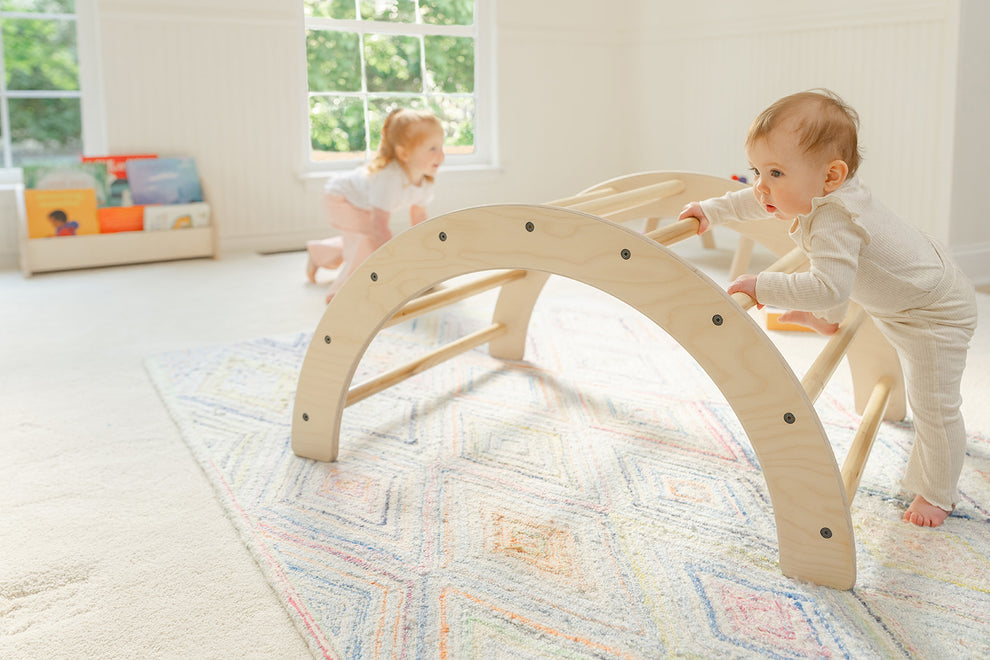
A soft, low gross motor climber gives babies who are starting to sit, pivot, and eventually pull up something safe to explore right at floor height, encouraging exactly the kind of core and trunk engagement that supports independent sitting. And a low table — sized so your baby can sit or kneel at true floor height, rather than being lifted up to an adult-height surface — gives them a stable, motivating place to practice sitting upright while reaching for a toy or a snack, instead of sitting up just because you asked them to.

The Climbing Arch
A Pikler-style climbing arch that gives babies and toddlers a safe, low structure to explore as they build core strength, balance, and confidence.
Shop The Climbing Arch — $229 →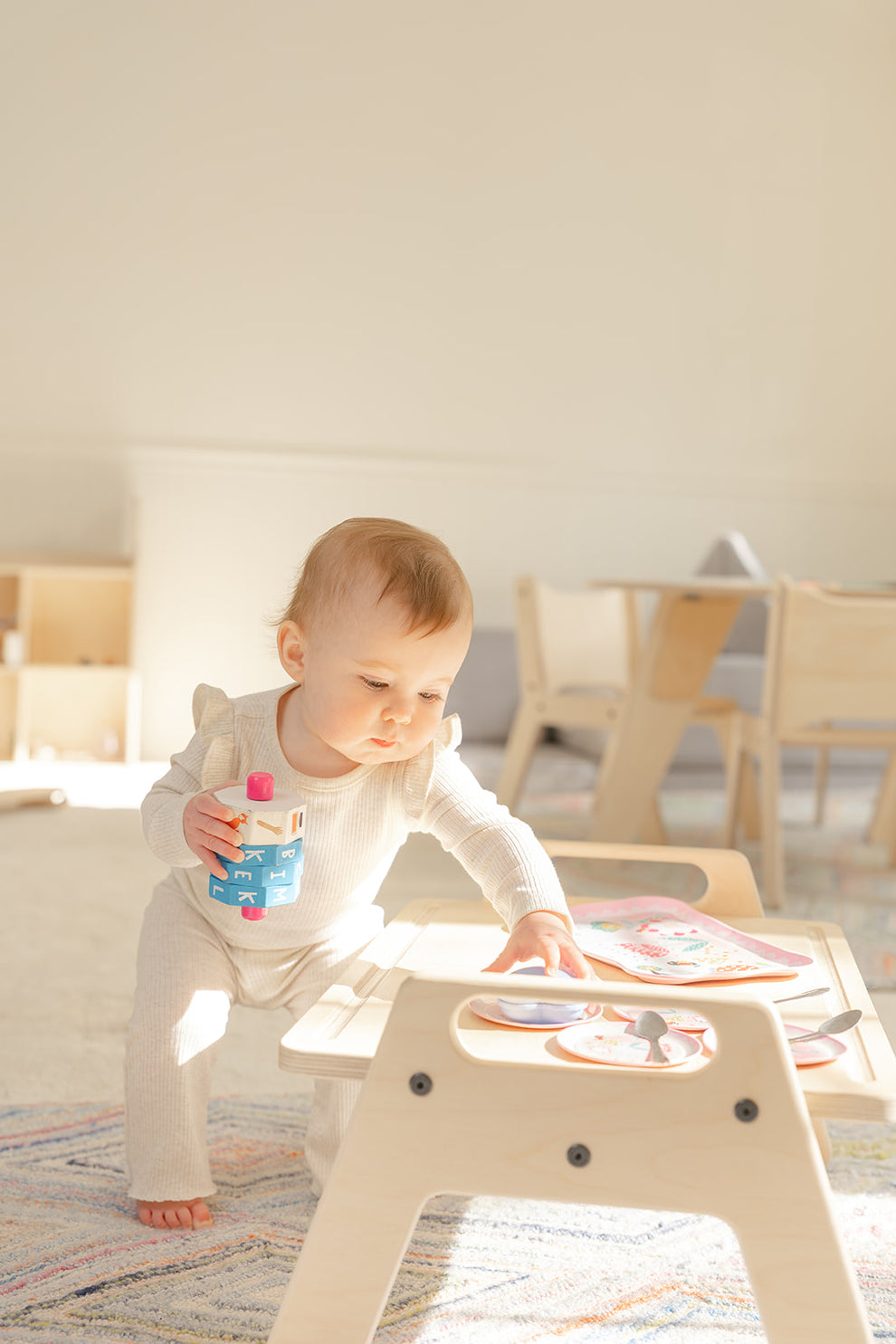
The Play Tray
A true floor-height table that gives a newly-sitting baby a stable surface to reach, play, and snack at — sized for exactly where they are right now.
Shop The Play Tray — $139 →5 When to Check In With Your Pediatrician
Most sitting timelines that feel "behind" are simply within the normal range. That said, pediatric sources generally suggest checking in with your child's doctor if your baby isn't sitting upright with support by around 8 months, seems consistently floppy or unusually stiff, or leans persistently to one side only. Bringing it up doesn't mean something is wrong — it just means your pediatrician can look at the full picture and offer real peace of mind either way.
Nikki Benbenek is the co-founder of Blueberry and Third and a mom of two girls. When she's not designing Montessori-inspired furniture, she's probably up too late Googling the exact same milestone questions as you.